The cabaret behind the café
Zielony Balonik: the Green Balloon cabaret
How a group of Kraków artists turned a pastry shop's back room into Poland's first literary cabaret, and why its puppets still sit in the café.
Reserve your table for the show ↗Quick answer
Zielony Balonik, the Green Balloon, was a literary cabaret that gave its first show in the back room of Jama Michalika on 7 October 1905, according to Culture.pl. It ran regularly until 1912, mixed improvised jokes, songs and satirical puppets, and is why the café is famous beyond Kraków.
A pastry shop and its artists
Jan Apolinary Michalik, a confectioner who came to Kraków from Lviv, opened the shop in 1895 as the Lwów Confiserie. The front room sold sweets, cakes, ice cream and doughnuts, and some products carried Polish names, such as pastries called Mickiewicz and Manru. He invited students of the nearby Academy of Fine Arts to eat free in return for small works of art, and the back room, which had no windows, filled with painters, then writers and theatre people. Its nickname, Michalik's Den, is said to come from that windowless room. The artists drew on the walls and on loose paper, and the pictures were hung up.
The first night
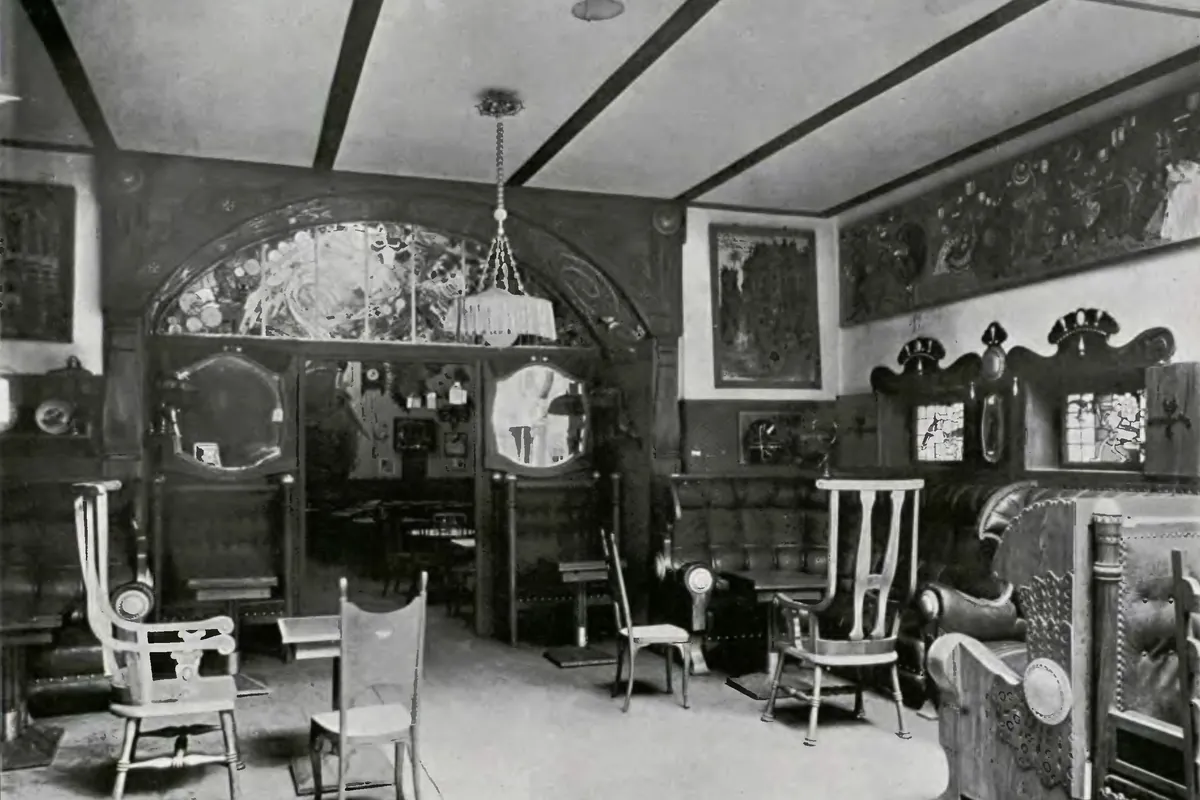
Culture.pl dates the first Green Balloon evening to 7 October 1905, in the back room. English Wikipedia gives the same date, while the Polish Wikipedia article cites an invitation dated 7 June 1904, so sources differ on the start. All agree on the spirit: a largely improvised programme of painting and theatre jokes, with Witold Noskowski at the piano. Guests came by invitation for most of the cabaret's life, and the audience was mostly artists and their friends, so the satire was aimed at Kraków's own circles. According to an anecdote, the name came from a boy's green balloon escaping into the sky outside.
Who made it
The cabaret was a group idea. Culture.pl names Karol Frycz, Jan August Kisielewski, Kazimierz Sichulski and Noskowski among the founders, and Tadeusz Boy-Żeleński joined early as a lyricist. Kisielewski and then Stanisław Sierosławski acted as compères. Poland was then divided between three empires, and Austrian censorship in Kraków meant that scripts avoided pressing politics, so the humour kept to art, theatre and local figures. Boy-Żeleński later wrote that Michalik at first saw a cabaret as a profanation of his establishment, then saw that it could earn money.
The puppets
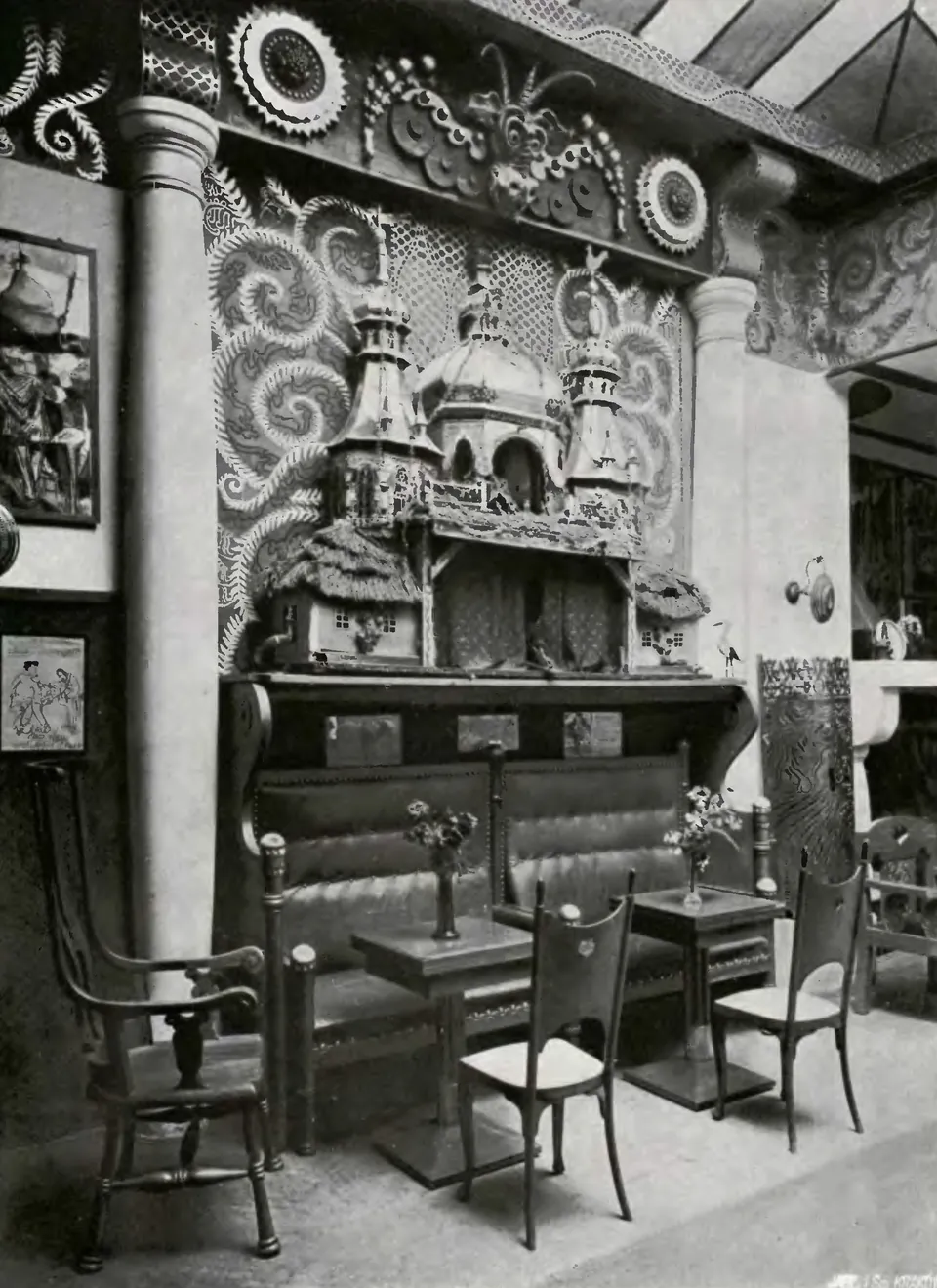
From 1906 the cabaret staged puppet shows modelled on nativity scenes, with a stage by the painter Stanisław Kamocki. Familiar characters such as King Herod and the Three Wise Men stood in for well-known Cracovians, among them the painter Julian Fałat and the city's president Juliusz Leo. The shows became the cabaret's main attraction and, in 1911, a ticketed event. The form echoes Kraków's own nativity-scene tradition, the szopka, which UNESCO inscribed in 2018. Some of the Balloon's puppets survive and are shown in glass cases in the café today.
The end of the run
The 1911 puppet show was the Balloon's last great success. When another was staged the following year it did not work, and Culture.pl suggests the humour had worn thin after years on similar topics. English Wikipedia says the cabaret ran regularly until 1912 and occasionally until 1915. Michalik had expanded the café in 1910 with two new rooms and a kitchen, but the great days of the circle were over, and in 1918 he sold the business. He later moved to Poznań and opened a boarding house, and died in 1928.
What it left behind
The Green Balloon is usually called Poland's first literary cabaret, and the café kept its name alive: a later cabaret called Jama Michalika played in the hall from 1960 until 1991. The walls still show the artists' work, and a folk dinner show now runs in the café. If you book the evening, you are sitting in the room where Kraków's artists once laughed at themselves, which is a better reason to look up from the table than most. The folk show is a separate production, not a revival of the cabaret.
Frequently asked questions
When did the Green Balloon start?
Culture.pl and English Wikipedia give 7 October 1905. The Polish Wikipedia article cites an invitation dated 7 June 1904, so some accounts date it a year earlier.
Where are the puppets now?
A selection of the cabaret's puppets is displayed in glass cases in the café, according to Culture.pl and Wikipedia. Which ones are on show can change.
Is the folk show part of the old cabaret?
No. The folk dinner is a separate show by a different organiser. It takes place in the same café, but it is not a revival of the Green Balloon.
Sources